Why Mice Enter Homes in the Winter and How to Stop Them
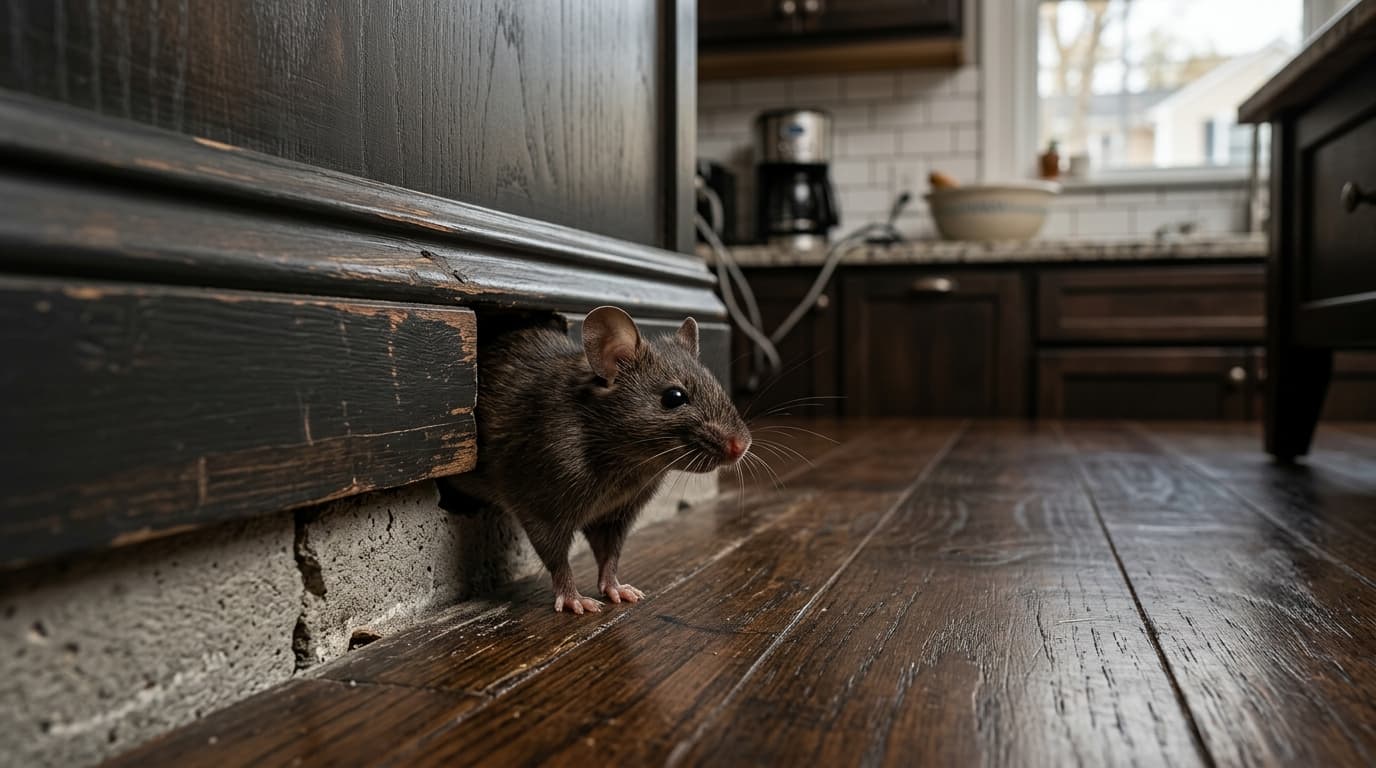
As winter settles over Long Island, you're not the only one looking to stay warm. Every fall and winter, thousands of Long Island homes become targets for house mice — tiny, determined rodents that can squeeze through openings you'd never think possible.
Understanding why mice invade and where they get in is the first step to keeping them out permanently. This guide walks you through the science, the common entry points, and the professional solutions that actually work.
Why Winter Drives Mice Indoors
House mice (Mus musculus) aren't built for cold weather. Unlike larger wildlife, they don't hibernate and have very little body fat to insulate them. When outdoor temperatures drop below 50°F, mice instinctively begin searching for three things:
- Warmth — Your heated home radiates warmth through foundation cracks, creating a thermal beacon that mice can detect from surprising distances.
- Food — Even the crumbs under your toaster or a bag of dog food in the garage represent a feast.
- Shelter — Wall cavities, insulation, and cluttered storage areas provide perfect nesting material.
A single pair of mice can produce up to 60 offspring per year. So that "one little mouse" you saw in November? By February, you could be hosting an entire colony.
The 1/4 Inch Rule
Here's the fact that shocks most homeowners: a house mouse can squeeze through a gap as small as 1/4 inch — roughly the diameter of a pencil. Their skulls are semi-flexible, and if the head fits, the rest of the body follows. This means gaps you've never noticed are wide-open doors for rodents.
Top 5 Entry Points to Seal
During our inspections across Long Island, these are the entry points we find compromised most often:
1. Weep Holes in Brick Facades
These small gaps in exterior brick are designed to let moisture escape. But they're perfectly sized for mice. Solution: install stainless steel weep hole covers that allow airflow but block rodents.
2. Utility Line Penetrations
Where your AC lines, electrical cables, plumbing pipes, and gas lines enter the home, there's almost always a gap. These should be sealed with copper mesh and commercial-grade sealant — never expanding foam alone (mice chew right through it).
3. Garage Door Seals
The rubber sweep at the bottom of your garage door deteriorates over time, creating gaps at the corners. Mice walk right underneath. Replace damaged sweeps annually and consider adding a rodent guard.
4. Dryer Vents
External dryer vent flaps often get stuck open from lint buildup. This creates a warm, inviting tunnel directly into your home. Clean your dryer vent annually and ensure the external louver closes fully.
5. Foundation Cracks
Even hairline cracks in your foundation can widen over time due to freeze-thaw cycles. Inspect your foundation perimeter every fall and patch any cracks wider than 1/4 inch.
Why DIY Traps Usually Fail
Store-bought snap traps and glue boards might catch a stray mouse, but they rarely solve an infestation. Here's why:
- Traps only catch the boldest, most exploratory mice — the rest learn to avoid them
- Without sealing entry points, new mice replace the ones you catch
- Over-the-counter poisons can cause mice to die inside walls, creating terrible odors and attracting secondary pests
- Improper bait placement often results in zero catches despite heavy activity
The Professional Approach: Exclusion + Strategic Trapping
Professional rodent control isn't about setting better traps — it's about making your home impenetrable. At Squito Pest Control, our process includes:
- Full exterior inspection — We walk your entire foundation perimeter, roofline, and utility entry points to identify every potential access point.
- Exclusion sealing — We seal all identified gaps with rodent-proof materials (copper mesh, steel wool, commercial sealants).
- Strategic interior trapping — Targeted placement along confirmed travel paths for rapid colony reduction.
- Follow-up monitoring — We return to verify the seal is holding and all activity has ceased.
Don't Wait Until You Hear Scratching in the Walls
If you've seen droppings, heard noises in your walls or ceiling, or spotted a mouse in your kitchen, the colony is likely already established. Contact Squito Pest Control for a professional exclusion inspection before the problem multiplies — literally.